Proper Waste Disposal of Needles is a pressing public health issue. The improper disposal of needles can lead to the spread of diseases. According to the World Health Organization, used needles account for a significant number of healthcare-related injuries each year. In the United States alone, approximately 1.5 million injuries occur annually from improperly discarded needles.
Dr. Elizabeth Grant, a leading expert in medical waste management, emphasizes the importance of this practice. She states, "Ignoring proper disposal methods puts both healthcare workers and the public at risk." The need to ensure safe disposal is evident, as contaminated needles can transmit viruses like HIV and hepatitis.
Despite awareness, many people still struggle with effectively disposing of needles. Convenience often takes precedence over safety. This behavior can be dangerous and lead to serious health threats. The community must engage in proper education and resources to ensure the proper waste disposal of needles. Addressing these gaps is crucial for safeguarding public health and the environment.
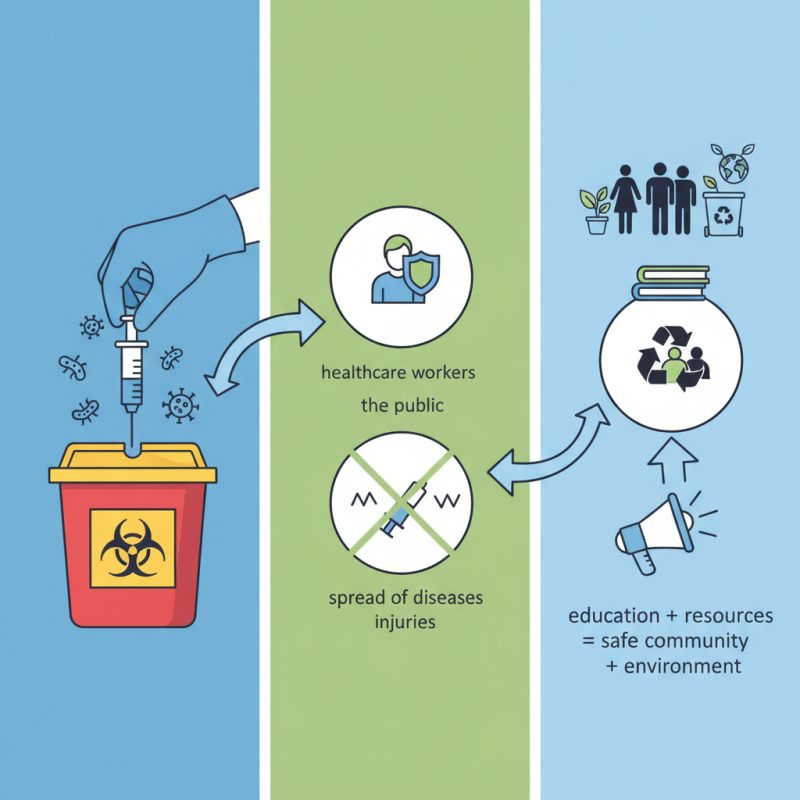
Definition of Proper Waste Disposal for Needles
Proper waste disposal of needles is crucial in maintaining public health and safety. Needles, often used in medical and personal care, can pose significant risks if not disposed of correctly. Many people might not realize that a single used needle can transmit infectious diseases. Understanding the need for proper disposal methods is essential.
Proper waste disposal for needles refers to specific methods that minimize risk. Ideally, needles should be placed in designated sharps containers. These containers are puncture-resistant, ensuring safe handling and disposal. In many areas, local regulations dictate how and where to dispose of these containers. It’s vital to follow these guidelines to prevent accidents during disposal.
Despite awareness, many still improperly dispose of needles. Some individuals throw them in regular trash or recycle bins. This careless behavior can lead to needle-stick injuries for waste management workers and the general public. Education on safe disposal practices remains crucial. Community programs can assist in spreading the message and providing resources for safe disposal.
Importance of Safe Needle Disposal for Public Health
Safe needle disposal is crucial for public health. Improper disposal can lead to serious health risks. Used needles may carry bloodborne viruses. These include HIV and Hepatitis B. When discarded carelessly, they pose a hazard to sanitation workers and the community. A used needle can injure someone unaware of its presence. Such injuries can lead to infections and severe health complications.
Health organizations emphasize the importance of safe disposal practices. Using sharps containers is a recommended method. These containers are designed to prevent needle stick injuries. They are sturdy and often puncture-resistant. Yet, many people don't utilize them. Instead, they might leave needles in regular trash or even flush them. These actions can contribute to a larger public health crisis.
Education is key to changing these behaviors. Communities need to understand the risks involved. Many people are not aware that sharing disposal methods affects everyone. When safe disposal practices are ignored, the repercussions can be widespread. Public health relies on responsible actions from each individual. Addressing these gaps is essential for community safety and well-being.
What is Proper Waste Disposal of Needles and Why It Matters? - Importance of Safe Needle Disposal for Public Health
| Dimension |
Data |
| Needle Disposal Methods |
Sharps Containers, Incineration, Waste Management Facilities |
| Health Risks of Improper Disposal |
Infections, Needle Stick Injuries, Environmental Contamination |
| Public Awareness Campaigns |
Community Workshops, Educational Materials, Online Information |
| Regulations on Needle Disposal |
OSHA, EPA Guidelines, State Health Regulations |
| Statistics on Needle Usage |
Over 3 billion needles used annually in the U.S. |
| Access to Disposal Locations |
Pharmacies, Hospitals, Community Centers |
Methods and Guidelines for Disposing of Needles Safely
Proper waste disposal of needles is critical for public safety and environmental health. Medical waste, including needles, poses significant risks. According to the World Health Organization, unsafe disposal of sharps can lead to needle-stick injuries. These injuries expose individuals to infections and diseases, including HIV and Hepatitis B. A study revealed that 38% of healthcare workers experience needle-stick injuries during their careers.
Safe disposal methods include using puncture-resistant containers specifically designed for sharps. These containers should be located in all areas where needles are used. It is essential to fill them only to the indicated fill line. Once full, they must be sealed tightly and disposed of according to local regulations. Some communities offer designated drop-off points for used needles. This reduces the risk of accidental needle-stick injuries in public spaces.
Education around needle disposal is often lacking. Many users are unaware of the dangers and responsibilities involved. Public awareness campaigns can play a pivotal role. They should inform individuals about safe disposal techniques. The CDC recommends that educational efforts target both healthcare professionals and the general public. This ensures that everyone understands the importance of proper needle disposal.
Consequences of Improper Needle Disposal
Improper needle disposal poses serious risks to public health and safety. Used needles can transmit infections like HIV and hepatitis. When not disposed of properly, they end up in public spaces. This negligence can lead to injuries for unsuspecting individuals, especially children. Scattered needles can also contaminate water sources, posing environmental hazards.
Tips for safe disposal include using puncture-proof containers. Make your own container from a plastic bottle. Label it clearly and keep it out of reach of children. Always check local guidelines for disposal locations. Some communities offer special drop-off services. Be aware that burning or flushing needles is not safe.
Not everyone understands the gravity of this issue. Some may think it is harmless to toss needles in the trash. This misconception can lead to serious consequences. Awareness is crucial. Take responsibility for your health and the community. Proper disposal of needles is a simple action that saves lives and protects the environment.
Regulations and Best Practices for Needle Waste Management
The disposal of needle waste is critical for public health and safety. According to the World Health Organization (WHO), improper disposal can lead to the transmission of bloodborne pathogens, affecting both workers and the general public. For instance, needlestick injuries can pose a severe risk, with an estimated 2 million injuries occurring annually in healthcare settings alone.
Best practices for needle waste management emphasize the use of sharps containers. The containers should be puncture-resistant, labeled clearly, and disposed of when they are three-quarters full. A study from the Centers for Disease Control and Prevention (CDC) indicates that proper disposal can reduce needlestick injuries by as much as 80%. However, compliance varies widely. Many facilities still do not follow regulations, leading to unnecessary risks.
Regulations require that needle waste be handled as hazardous waste in most jurisdictions. This includes state and local guidelines that healthcare facilities must abide by. Unfortunately, gaps in adherence persist. For example, some clinics may fail to educate staff adequately on disposal protocols. Increased training and awareness are crucial to improving compliance and ensuring safety. Addressing these shortcomings could significantly enhance the effectiveness of needle waste management strategies.
Conclusion
Proper waste disposal of needles is crucial for protecting public health and preventing the spread of infectious diseases. It involves adhering to specific guidelines that ensure the safe handling and disposal of used needles to minimize risks to individuals and the community. Safe needle disposal is particularly important as improperly discarded needles can lead to accidental injuries, transmission of pathogens, and environmental contamination.
Effective methods for safe needle disposal include using approved sharps containers and following local regulations for hazardous waste management. Failing to dispose of needles properly can result in serious consequences, including health risks for sanitation workers and citizens. Therefore, understanding the regulations and best practices for needle waste management is essential for everyone who uses needles, whether in healthcare settings or at home. By prioritizing proper waste disposal of needles, we can significantly enhance public safety and promote community health.
 ZNG Medical
