China Best Tips For Safe Syringe Disposal?

Time:2026-10-28 Author:Sophia
0%

Safe syringe disposal is a practical health responsibility in homes, clinics, pharmacies, and community settings across China. Used syringes can pierce skin and spread infection when handled carelessly. The right method protects families, sanitation workers, medical staff, and the wider community.

This guide explains Tips For Safe Syringe Disposal with clear, evidence-informed steps. It focuses on placing used syringes directly into a rigid, puncture-resistant sharps container. Never place loose syringes in household rubbish. Do not bend, break, or recap them unless a healthcare professional specifically instructs you. Small details matter.

Choose a container with a secure lid. Keep it upright and away from children and pets. When it reaches the marked fill line, close it firmly. Do not force extra items inside. Contact a hospital, licensed clinic, pharmacy, or local health authority for approved collection options. Disposal services can differ between cities and districts, so current local guidance should be checked.

A careful process is not always convenient. That is the honest part. Some people may lack a proper container or misunderstand collection rules. In that situation, pause and seek professional advice rather than improvising. China’s public health agencies and qualified medical providers remain the most reliable sources for location-specific instructions. Safe handling protects everyone. One careless moment can create a lasting injury.
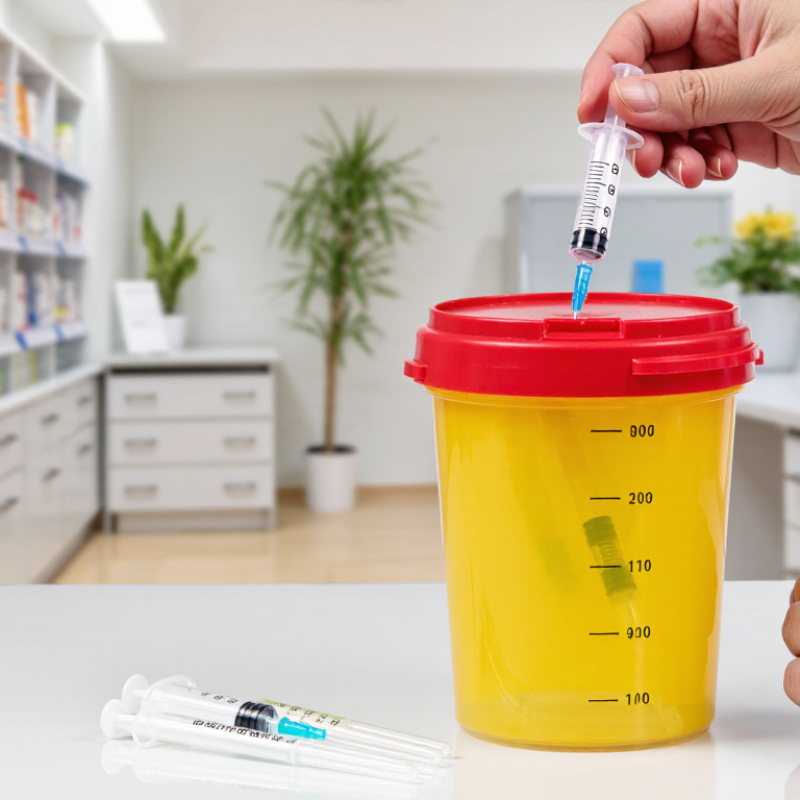
China Best Tips For Safe Syringe Disposal?

What Makes Syringe Disposal Safe and Necessary in China

In China, safe syringe disposal protects patients, cleaners, waste workers, and the wider community. A used needle can puncture skin within seconds. It may also expose someone to bloodborne infections. This risk exists in hospitals, homes, clinics, and public spaces. Small mistakes matter. Medical facilities should manage sharps through designated medical-waste channels under applicable local requirements.

A safe process begins at the moment of use. Never recap, bend, or break a needle by hand. Place the complete syringe directly into a rigid, puncture-resistant sharps container. The container should remain upright and close to the user. Keep it away from children and pets. When it is nearly full, close it securely. Do not overfill it. Healthcare workers should follow facility procedures and use approved collection routes.

For households, disposal routes can differ between cities and districts. Residents should contact a community health center or local sanitation office for clear instructions. A sealed sharps container must never enter an ordinary recycling bin. Do not leave it beside a public waste bin. That shortcut creates danger. Clear labeling and direct handover reduce confusion. In practice, convenience sometimes defeats caution, so disposal points should be easy to find. Personal routines also deserve review. A safer method is not always the most familiar one.

China Best Tips for Safe Syringe Disposal

Safe syringe disposal is necessary because used needles can transmit blood-borne infections and cause accidental needlestick injuries. The chart presents WHO estimates of the share of selected infections attributable to unsafe injections worldwide in 2000; it is provided as global context rather than a current China-specific prevalence estimate.

In China, used syringes should be placed immediately into designated, puncture-resistant sharps containers, never recapped by hand, and handled through approved medical-waste collection channels. Source: World Health Organization, Injection Safety.

How to Separate Used Syringes Before Disposal

China Best Tips For Safe Syringe Disposal?

How to Separate Used Syringes Before Disposal

Used syringes require careful handling from the moment treatment ends. Do not separate the needle from the syringe by hand. Do not recap, bend, or break the needle. Place the complete syringe directly into a rigid, puncture-resistant sharps container. The World Health Organization reports that about 16 billion injections occur worldwide each year, making safe disposal a significant public-health concern. Even one exposed needle can injure a family member, cleaner, or waste worker.

Tips: Keep the container upright and close to the use area. Use a wide opening, but never push items down with your fingers. If a safety device is attached, activate it according to its instructions before disposal. Do not mix syringes with household recycling or loose rubbish. Seal the container when it reaches the marked fill line, not when it becomes tightly packed. Follow local health-department or medical-waste guidance for final collection.

The separation step is often misunderstood. “Separate” should mean keeping used sharps away from ordinary waste, not dismantling each syringe. A 2010 WHO report linked unsafe injection practices with millions of preventable hepatitis B and hepatitis C infections globally. The numbers remain a warning. In real homes, rushed disposal can create small mistakes, especially when the container is inconveniently placed. A safer routine is simple: finish the injection, keep the needle pointed away, and place the entire unit inside immediately. Check the container afterward. That extra second matters.

Where to Place Needles in Approved Sharps Containers

China Best Tips For Safe Syringe Disposal?

Where to Place Needles in Approved Sharps Containers

Place an approved sharps container beside the injection area before using a syringe. Keep it upright on a stable surface. It should remain easy to reach, but children and pets must not access it. A bathroom shelf may seem convenient, yet moisture and accidental contact make it a poor choice. A clean, dry corner near the work area is safer.

Put the used needle directly into the container immediately after use. Do not leave it on a table, bed, or tray. Avoid recapping, bending, breaking, or removing the needle by hand. The container should be rigid, puncture-resistant, leak-resistant, and clearly marked for sharps. Never use a thin plastic bag or an ordinary drink bottle. Small errors matter.

Stop using the container when it reaches the marked fill line. Do not press the contents down. Close the lid firmly, then follow instructions from a medical facility, community health service, or local health authority in China. Disposal procedures can differ by location. I once assumed “sealed” meant “safe,” but a loose lid can still expose someone. Check it again before moving the container.

China Best Tips For Safe Syringe Disposal? - Where to Place Needles in Approved Sharps Containers

Safety Dimension Recommended Practice Why It Matters What to Avoid
Container selection Use an approved, rigid, puncture-resistant sharps container with a secure, leak-resistant closure. It helps prevent needle-stick injuries, leakage, and accidental access. Do not use thin plastic bags, cardboard boxes, glass jars, or open household wastebaskets.
Placement location Place the container within easy reach at the point of use, on a stable surface and away from children and animals. Keeping the container nearby reduces the chance of carrying or dropping an exposed needle. Do not place it on the floor, in a bathroom accessible to children, or in a location where it can be knocked over.
Immediate disposal Put the used needle and syringe directly into the sharps container immediately after use. Immediate disposal limits handling and reduces exposure to blood or other potentially infectious material. Do not leave used sharps on tables, beds, trays, or other temporary surfaces.
Recapping rule Avoid bending, breaking, removing, or recapping a used needle unless a specific clinical procedure requires it and a safe one-handed method is used. Most accidental needle-stick injuries occur during or after handling used needles. Never use both hands to replace a cap or attempt to push a needle into a cap by hand.
Fill level Stop using the container when it reaches the marked fill line or approximately three-quarters full, according to the container instructions. Overfilled containers can allow sharps to protrude or cause injuries when closed. Do not press, shake, or push down the contents to create more space.
Closing the container Secure the lid or closure completely before moving the container. A properly closed container helps prevent spills and access during transport. Do not reopen, empty, hand-sort, or transfer sharps from one container to another.
Other sharp items Dispose of lancets, pen needles, broken contaminated glass, and other contaminated sharp objects in the same type of approved sharps container, when applicable. All contaminated sharps can puncture bags or injure waste handlers. Do not place contaminated sharps in recyclable materials or ordinary mixed household waste.
Disposal route in China For home use, contact the local community health service center, medical facility, disease-control service, or local waste authority for the designated collection route. Collection and classification requirements may differ between cities and districts. Do not assume that a sealed sharps container can be placed in regular household recycling or general waste.
Healthcare facilities Follow the facility’s medical-waste segregation, labeling, storage, collection, and handover procedures. Healthcare settings must manage sharps as regulated medical waste through authorized internal and external processes. Do not mix sharps containers with general waste or leave them in public areas.
Accidental needle-stick Wash the area immediately with soap and running water, avoid squeezing the wound, and seek prompt medical assessment. Timely evaluation is important for assessing possible exposure and any required follow-up. Do not ignore the injury or delay medical advice, especially when the source is unknown.

Important: Local disposal requirements may vary across China. Always confirm the current collection method with the relevant local health facility or waste-management authority.

How China Handles Collection and Transport of Used Syringes

China Best Tips For Safe Syringe Disposal?

Across China, used syringes are generally treated as infectious medical waste. Healthcare workers place them directly into rigid, puncture-resistant sharps containers. Recapping is avoided. Containers should remain upright, sealed, and clearly marked before collection. In clinics and hospitals, trained staff usually move filled containers to a temporary medical-waste storage area. People using injections at home should ask a nearby clinic or local health service about approved return points. Household rubbish is not a safe option.

Collection and transport require careful coordination. Authorized medical-waste teams collect sealed sharps containers according to local schedules and facility procedures. Workers check container condition, labels, quantities, and handover records. Dedicated vehicles, closed compartments, and protective equipment help prevent leaks or accidental contact. Local requirements may differ between provinces and cities, so a facility should confirm current instructions with its health or environmental authority. Paperwork helps, but it does not prevent every mistake.

Tips: Never bend, break, or recap a used syringe. Keep containers away from children and pets. Do not overfill them. If a container is damaged, isolate it and contact a healthcare facility. A small label showing the collection date can improve tracking. In practice, busy sites may delay handovers or overlook a loose lid. That is a warning sign, not a minor detail. Regular staff training and simple inspection checks can make the process safer.

What to Do After Accidental Needle Contact or Injury

If a used syringe touches your skin, stay calm and move away from the sharp object. Let the wound bleed gently. Do not squeeze, scrub, or suck it. Wash the area with running water and soap for several minutes. Avoid bleach or harsh chemicals. If blood reaches your eyes, nose, or mouth, rinse with clean water immediately.

Seek medical care as soon as possible, even if the puncture looks tiny. Tell the clinician when and how the contact happened. They may assess exposure risks, hepatitis B protection, tetanus needs, and other preventive treatment. Some treatments work best when started quickly, often within hours. Do not wait for symptoms. Many infections show none at first. A local hospital or public health service can provide confidential guidance in China.

Report the incident to a supervisor if it happened at work. Record the time, location, and visible details without handling the syringe again. Do not recap, bend, or break it. Keep children and animals away. If safe, ask trained personnel to place it in an approved sharps container. Never force a full container closed. I have seen people focus on disposal and forget their own injury. That is an easy mistake. Your health comes first. Follow-up testing may be advised, but schedules differ by exposure and medical assessment.

FAQS

Why is safe syringe disposal necessary in China?

A used needle can puncture skin within seconds. It may expose patients, cleaners, children, or waste workers to blood.

Should I remove the needle before discarding a used syringe?

No. Keep the complete syringe together. Never remove, bend, break, or recap the needle by hand.

What container should hold a used syringe?

Use a rigid, puncture-resistant sharps container. Keep it upright, nearby, and away from children and pets.

Where should I place the container after an injection?

Place it beside the treatment area before use. Keep the needle pointed away. Put the entire syringe inside immediately.

Can used syringes enter household recycling or loose rubbish?

No. Never place them in recycling bins or ordinary waste bags. One exposed needle can injure someone.

When should I close the sharps container?

Seal it at the marked fill line. Do not wait until it becomes tightly packed. Never push items down with your fingers.

What does “separate” mean before disposal?

It means keeping used sharps away from ordinary waste. It does not mean dismantling the syringe.

How can households dispose of sealed containers in China?

Collection routes vary by city and district. Contact a community health center or local sanitation office for current instructions.

What if the safe routine feels inconvenient?

Review the setup. A nearby container reduces rushed mistakes. Convenience sometimes defeats caution, and that deserves attention.

What should healthcare workers do differently?

Follow facility procedures and approved collection routes. Activate attached safety devices according to their instructions before disposal.

Conclusion

Safe syringe disposal is essential in China because loose needles can injure sanitation workers, family members, healthcare staff, and the public, while also creating infection risks. These Tips For Safe Syringe Disposal begin with handling every used syringe carefully: do not bend, break, recap, or separate the needle by hand unless a trained professional and approved procedure specifically require it. Place the entire syringe directly into a rigid, puncture-resistant, leak-resistant sharps container that is clearly marked and kept away from children and animals. Never put used syringes in household recycling, general waste, toilets, or public areas.

When the container is nearly full, close it securely and follow local healthcare, community, or medical-waste collection instructions for pickup and transport. Do not overfill, shake, or carry it loosely. If accidental needle contact occurs, wash the area immediately with soap and running water, avoid squeezing the wound, and seek prompt medical evaluation for risk assessment and follow-up. Clean, consistent disposal practices help protect individuals, communities, and the environment.

Sophia

Sophia

Sophia is a dedicated marketing professional with an exceptional depth of knowledge about her company's products and services. With a keen understanding of market trends and customer needs, she crafts insightful blog posts that not only inform but also engage readers, enriching the company’s online......