ZNG Medical
Choosing how insulin is delivered can shape ordinary moments: packing for work, changing clothes, or checking a glucose alert during the night. This 2026 guide to Selecting Insulin Delivery Systems compares insulin pens, traditional pumps, and tubeless options through practical questions, not promises of a perfect fit. The best choice depends on individual treatment needs, comfort, routine, and guidance from a qualified diabetes care team.
Small details matter. A pump may offer adjustable delivery and connected features, but it can also require regular site changes, charging, or troubleshooting. A pen may feel simpler to carry, though injections and dose tracking still take attention. Skin sensitivity, hand strength, phone compatibility, insurance coverage, and travel habits can all influence the daily experience. Check device instructions and confirm compatibility with your glucose-monitoring tools before making assumptions. Features vary.
No system removes the need for learning or follow-up. Ask how supplies are obtained, what happens when a device fails, and which warning signs require prompt medical advice. A clinic demonstration can reveal awkward steps that product pages rarely show. And preferences can change. This guide offers a structured starting point, not a personal prescription; the final decision should be made with a clinician who understands your health history. Even careful comparisons leave questions. Bring them along.
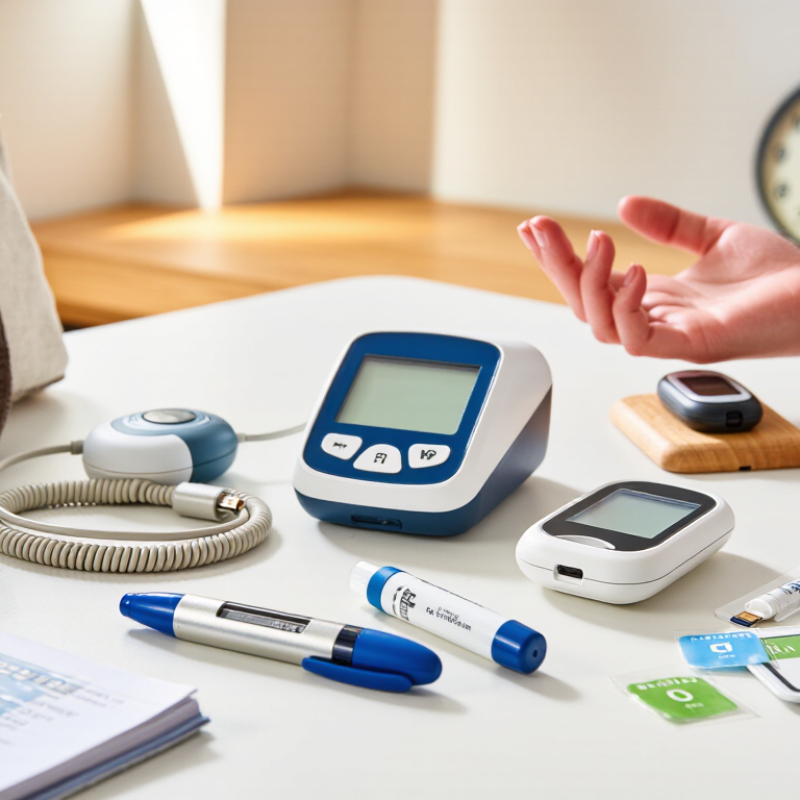
Insulin delivery ranges from familiar injections to connected pump systems. With a syringe, the user draws insulin from a vial and injects it under the skin. Insulin pens hold a cartridge and use a dial to set each dose; their click and dose window can help with routine, though small print may be difficult to read. Both methods require careful dose timing and sharps handling.
Simple, but not always easy.
Insulin pumps deliver rapid-acting insulin through a small cannula, usually worn on the abdomen or another approved site. Some systems pair a pump with continuous glucose monitoring and adjust insulin delivery using glucose readings. The American Diabetes Association’s Standards of Care in Diabetes—2025 recommends offering automated insulin delivery to people with type 1 diabetes who can use it safely, while matching device choice to individual needs and preferences. That is guidance, not a promise of perfect glucose control.
The ADA report also notes that people using insulin should be offered diabetes technology based on their circumstances, preferences, and needs. Practical details matter: a pump needs charging or supplies, while injections need fresh needles and dose tracking. A device can beep during a meeting. It can also be forgotten. The right system depends on dexterity, vision, daily schedule, comfort with technology, and clinician guidance—not just its features.
2026 Top Guide to Selecting Insulin Delivery Systems
How Insulin Delivery Systems Work
Insulin delivery systems place prescribed insulin beneath the skin, where the body can absorb it. Traditional options include syringes and pens for meal doses or corrections. Pumps use a small reservoir, tubing, and a cannula to provide background insulin throughout the day. Some systems can also deliver extra doses around meals.
More advanced systems may use glucose readings to adjust insulin delivery. However, they do not replace clinical judgment. Sensors can lag behind blood glucose changes, and infusion sets may loosen, block, or irritate the skin. A system that looks efficient on paper may feel difficult during sleep, exercise, travel, or school. That assumption can fail. Learning each device’s alerts, storage needs, and backup steps matters.
Tips: Ask a qualified healthcare professional to compare dosing flexibility, insertion comfort, alarm volume, training, and cost. Check the official instructions before changing settings. Keep a backup delivery method available. Inspect the site for redness, swelling, pain, or unexpected glucose changes. Never ignore repeated delivery problems. Record patterns, but avoid changing insulin doses without professional guidance. Small details matter.
Insulin delivery systems administer insulin, while the insulin formulation determines how quickly it starts working and how long its effect lasts. Typical duration ranges shown here are approximate; actual action varies by formulation and individual. This chart is for general education, not dosing guidance.
Choosing an insulin delivery system starts with fit, not a feature list. Compare how each option handles your prescribed insulin, dose increments, and daily routine. A pen may suit someone who values simple setup. A pump can allow more flexible dosing, but neither is automatically better. Check compatibility with your insulin and glucose-monitoring tools. Also consider cartridge or reservoir changes, charging, alarm settings, and how the system behaves if connectivity drops. Small details matter.
Look at the full workload, not just the device. Can you read the screen easily in bright sunlight? Are buttons manageable with cold fingers? Check training requirements, ongoing supplies, repair support, and total costs. Ask what backup plan your clinician recommends for device failure or travel. A system that looks convenient in a brochure may feel different during a rushed morning. It is worth testing the routine, and reconsidering assumptions, before committing.
Tips: Write down your usual schedule and must-have features. Bring the list to a diabetes care professional. Ask for a demonstration using a practice device, then compare the steps you would repeat each day.
Compare the general features below with your clinician. Availability, device specifications, and coverage vary by location and individual prescription.
| Delivery approach | How insulin is delivered | Mealtime dosing | Glucose monitoring and automation | Wear and daily routine | Potential advantages | Factors to consider | Questions to compare |
|---|---|---|---|---|---|---|---|
| Multiple daily injections (syringe and vial) | Usually combines long-acting insulin for background needs with rapid-acting insulin for meals and corrections, as prescribed. | Rapid-acting insulin is drawn up and injected for meals or correction doses according to the treatment plan. | Requires glucose monitoring with a blood glucose meter, a continuous glucose monitor (CGM), or both. Dosing decisions are generally made by the user using their care plan. | No device is worn continuously. Injections and supplies must be carried and managed throughout the day. | Offers flexibility in choosing injection times and locations; does not require a pump or wearable controller. | Injections are needed multiple times a day. Drawing up doses requires handling syringes and vials, which may be difficult for some users. | Are dose measurement, vision, dexterity, storage, and carrying supplies manageable? |
| Multiple daily injections (insulin pen) | Uses prescribed long-acting and rapid-acting insulin in pen devices; the user selects and injects each dose. | Meal and correction doses are delivered by dialing a dose and injecting, following the individual treatment plan. | Monitoring may use a meter, CGM, or both. A pen does not automatically adjust insulin based on glucose readings. | No pump is worn. Some pens are disposable; others use replaceable insulin cartridges. Pen needles are changed according to instructions. | Convenient dose selection and portability; some models can record doses, but features differ. | Requires repeated injections and consistent dose entry. Pen compatibility, dose increments, and memory features vary by model. | Does the pen support the prescribed insulin and dose range? Is a dose-memory feature useful? |
| Conventional insulin pump (tubed) | A wearable pump typically delivers rapid-acting insulin continuously in small background doses, with additional doses programmed or requested by the user. | Meal doses are usually entered by the user. Some pumps can calculate a suggested dose from entered information and settings. | Some pumps work with CGM data; monitoring and automation capabilities vary. Conventional pump therapy does not necessarily automate insulin adjustments. | The pump is worn on or near the body and connects through tubing to an infusion set. Infusion sets are commonly changed every few days according to product instructions. | Programmable background delivery and adjustable dosing can support different schedules and changing insulin needs. | Requires training, device upkeep, infusion-site care, and a plan for interrupted delivery. Because many pumps use rapid-acting insulin only, interruption can require prompt action under the user's care plan. | Are tubing, site changes, alarms, and the pump's wear options acceptable for daily activities? |
| Tubeless patch pump | A small pump worn on the skin delivers prescribed insulin through a short cannula; the device is generally controlled wirelessly or through an associated controller. | Meal doses are commonly initiated by the user through the controller or compatible device, depending on the system. | CGM integration and automated features depend on the specific system. A patch pump is not automatically an automated insulin delivery system. | The pump is attached directly to the body without external tubing. Wear duration and replacement schedule depend on the device instructions. | No external tubing; may suit users who prefer a more self-contained wearable pump. | Adhesive tolerance, placement options, device size, controller access, and replacement-supply costs should be considered. | Can it be worn comfortably during sleep, exercise, bathing, and work? What is the prescribed replacement schedule? |
| Automated insulin delivery (AID) system | Combines an insulin pump, CGM, and control algorithm. The algorithm can adjust insulin delivery based on CGM readings, within system limits. | Many systems still require the user to announce meals or enter meal information and deliver a meal bolus. Automation does not remove all user tasks. | Uses CGM data to automate some insulin adjustments. The level of automation, targets, alerts, and operating requirements differ between systems. | Requires wearing and maintaining a pump and CGM. Sensor and infusion-site replacement schedules follow their respective product instructions. | Can reduce the amount of manual background-insulin adjustment and may help improve glucose management for eligible users. | Requires training, compatible supplies, reliable device use, and backup plans for sensor, pump, connectivity, or insulin-delivery interruptions. Not every system is appropriate for every person. | What tasks remain manual? Is the system compatible with the user's CGM, insulin, phone or controller, and care plan? |
Selection note: No delivery method is best for everyone. Discuss insulin needs, comfort with devices or injections, hypoglycemia risk, dexterity and vision, lifestyle, training, access to supplies, total out-of-pocket cost, and insurance coverage with a qualified healthcare professional. Follow the device instructions and prescribed treatment plan.
Choosing an insulin delivery system means matching its daily demands to the person using it. Consider dosing frequency, comfort with technology, vision, hand dexterity, sleep routines, work, and access to supplies. A system that looks simple in a clinic may feel fiddly during a rushed lunch break. Fit matters. The American Diabetes Association’s Standards of Care in Diabetes—2025 recommends considering individual needs, preferences, and circumstances when selecting diabetes technology. It also advises that people using automated insulin delivery receive training and ongoing support. These details matter as much as the device’s features.
Compare real routines, not just specifications. Someone who prefers injections may still benefit from a continuous glucose monitor: in the 2017 DIAMOND randomized trial, adults with type 1 diabetes using multiple daily injections and continuous glucose monitoring lowered HbA1c by an average of 0.6 percentage points over 24 weeks, versus 0.2 points with usual care. That result does not predict an individual’s outcome. An insulin pump or automated system may suit someone seeking more automated dosing, but requires training and a plan for supply or device interruptions. The trade-off is easy to underestimate. Before choosing, discuss costs, alarms, skin comfort, and backup dosing with a qualified diabetes care professional; then review how the setup works in everyday life.
Choosing an insulin delivery system is a safety decision, not just a device comparison. The CDC’s 2024 National Diabetes Statistics Report estimated that 38.4 million Americans had diabetes, highlighting the scale of ongoing treatment needs. Yet no single system suits everyone. Compare dose controls, alarm clarity, skin comfort, dexterity needs, and supply requirements. A missed infusion interruption can become serious, especially for people who depend on continuous insulin delivery.
The American Diabetes Association’s Standards of Care in Diabetes—2025 recommends matching diabetes technology to each person’s needs, preferences, and abilities. Training should cover routine use, alarm response, site changes, and backup insulin plans. Practice before pressure. Include caregivers when appropriate, and ask the care team to check technique after setup and whenever treatment changes. Follow-up matters: review glucose records, recurring alarms, skin reactions, and whether the system still fits daily routines. Not every lesson sticks the first time; that is a reason to revisit training, not to blame the user.
Tips: Before choosing, rehearse a site change and an alarm response with a clinician. Keep written backup instructions and supplies accessible. At follow-up, bring real examples of missed doses, confusing alerts, or difficult moments.
Common options include syringes, insulin pens, and insulin pumps. Each requires planning, dose timing, and safe supply handling. Simple does not always mean easy.
A syringe draws insulin from a vial. The dose is injected under the skin. Users must track doses and dispose of used needles safely.
An insulin pen contains a cartridge and uses a dial for dosing. Its clicking sound and dose window may support routines. Small print can challenge people with limited vision.
A pump usually delivers rapid-acting insulin through a small cannula. The cannula may sit on the abdomen or another approved site. The device needs supplies, monitoring, and a backup plan.
Some systems use glucose readings to adjust insulin delivery. They may reduce daily dosing tasks. Training remains essential, and perfect glucose control is not guaranteed.
Consider vision, hand dexterity, sleep habits, work, technology comfort, and access to supplies. A device may look simple in a clinic. Lunch breaks can feel different.
Yes, some people combine multiple daily injections with continuous glucose monitoring. One study found improved average glucose measures over twenty-four weeks. Individual results can differ greatly.
Discuss costs, alarms, skin comfort, training, and supply interruptions. Ask about backup dosing during device problems. The best choice may need revision later.
Selecting Insulin Delivery Systems requires understanding the main options, including syringes, pens, wearable pumps, and automated systems. Each method delivers insulin differently, so users should consider convenience, dosing flexibility, device complexity, portability, and overall cost. Comparing how a system fits daily routines, glucose monitoring habits, comfort preferences, and treatment plans can help individuals and care teams identify a practical choice.
The right system should also match a person’s age, dexterity, vision, lifestyle, and ability to manage technology. Before starting, users need clear instruction on dosing, storage, device operation, hygiene, and recognizing signs of high or low blood glucose. Ongoing follow-up is important for reviewing performance, replacing supplies, adjusting therapy when needed, and addressing technical or treatment concerns. A careful, personalized selection process can support safer insulin use and more consistent diabetes management.
